
The CCNP Security certification from Cisco is a premier credential that validates advanced-level skills necessary for securing modern network infrastructures. This certification is ideal for network security engineers, senior security administrators, and security architects who design, implement, and manage comprehensive security solutions. It signifies an individual’s deep expertise in core security technologies and specialized security areas. This article provides a strategic blueprint for pursuing the CCNP Security certification, covering its foundational elements, specialization options, career advantages, and effective preparation methodologies.
Validating Core Security Expertise with CCNP Security
Achieving the CCNP Security certification requires passing two exams: a core exam and one concentration exam of your choice. The core exam, 350-701 SCOR (Securing Cisco Networks with Firepower Next-Generation Firewall and ASA Firewall), is mandatory. It evaluates your knowledge of implementing and operating core security technologies, including network security, cloud security, content security, endpoint protection and detection, secure network access, visibility, and enforcement. This foundational exam ensures all certified professionals possess a robust understanding of the critical security concepts essential for protecting complex networks.
The 350-701 SCOR exam is a broad assessment, covering a wide array of security principles and technologies. Its comprehensive nature prepares candidates not just for specialized tasks but also for understanding the interconnectedness of various security domains within an enterprise environment. Successfully navigating this exam signifies a candidate’s readiness to tackle diverse security challenges, from policy enforcement to incident response, across hybrid environments. This foundational knowledge is crucial for anyone looking to build a sustainable career in cybersecurity, providing a solid platform for further specialization and career growth within the Cisco ecosystem.
Architecting Robust Defenses: The CCNP Security Foundation (350-701 SCOR)
The 350-701 SCOR exam acts as the cornerstone of the entire CCNP Security certification path, ensuring a consistent and high standard of expertise across all specialization tracks. This examination emphasizes practical application and foundational knowledge, making it a critical step for any professional aiming to validate their advanced security skills. Candidates are tested on their ability to configure and manage network security solutions, implement cloud security best practices, and secure endpoints effectively. For more details on the significant advantages this certification offers, exploring its immense value can provide further insights into its professional impact.
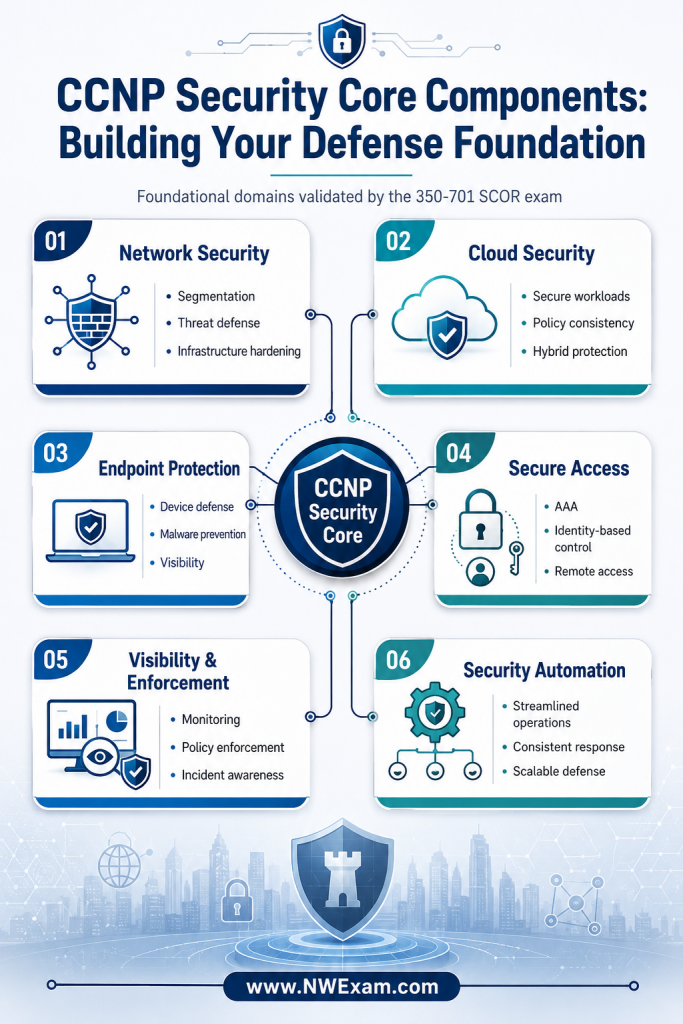
The breadth of topics covered in the SCOR 350-701 exam prepares security professionals for a variety of roles within an organization. It mandates proficiency in implementing various security measures and understanding how different security components integrate to form a cohesive defense strategy. This includes deploying firewalls, configuring intrusion prevention systems, managing VPN solutions, and securing network access. Mastery of these areas is not only crucial for the exam but directly translates into the capability to safeguard an organization’s digital assets against evolving threats.
Specializing in Advanced Security Domains
After mastering the core security concepts with the 350-701 SCOR exam, candidates choose one of several concentration exams to demonstrate specialized expertise. This allows for tailored skill development based on career interests or organizational needs, reinforcing the future-oriented nature of the CCNP Security blueprint. These specialized exams delve into specific Cisco security solutions, offering a deeper dive into particular technologies and their practical applications.
Cisco offers a diverse range of concentration exams, each focusing on a distinct area of network security. These options ensure that professionals can align their certification path with the specific demands of their current role or desired career trajectory. The flexibility in choosing a specialization makes the CCNP Security certification highly adaptable and relevant across various cybersecurity functions. Cisco’s official exams and training page provides a comprehensive overview of each concentration exam, helping candidates make informed decisions about their specialization.
Implementing Secure Solutions with Cisco Firepower (300-710 SNCF)
The 300-710 SNCF (Securing Networks with Cisco Firepower) exam focuses on deploying and managing Cisco Firepower Next-Generation Firewall (NGFW) and Next-Generation Intrusion Prevention System (NGIPS). Professionals pursuing this specialization gain proficiency in threat detection, intrusion prevention, advanced malware protection, and URL filtering. This expertise is critical for organizations heavily reliant on Cisco’s integrated threat defense architecture.
Enabling Secure Access with Cisco ISE (300-715 SISE)
The 300-715 SISE (Implementing and Configuring Cisco Identity Services Engine) exam validates skills in implementing and managing Cisco Identity Services Engine (ISE). This includes advanced topics such as network access control, guest access services, profiler, posture assessment, and endpoint compliance. ISE specialists are vital for organizations needing granular control over network access and robust policy enforcement.
Securing Email and Web Gateways (300-720 SESA, 300-725 SWSA)
For professionals focused on protecting communication channels, the 300-720 SESA (Securing Email with Cisco Email Security Appliance) and 300-725 SWSA (Securing the Web with Cisco Web Security Appliance) exams are available. The SESA exam covers email security, including spam and malware defense, data loss prevention, and email encryption. The SWSA exam focuses on web security, including web proxy, URL filtering, advanced malware protection for web traffic, and application visibility and control. These specializations are crucial for safeguarding an organization’s most common attack vectors.
Deploying Secure Remote Connectivity (300-730 SVPN)
The 300-730 SVPN (Implementing Secure Solutions with Virtual Private Networks) exam concentrates on implementing and managing VPN solutions across Cisco platforms. This includes site-to-site VPNs, remote access VPNs, and VPN technologies like FlexVPN and DMVPN. Professionals with this certification are essential for enabling secure remote workforces and protecting data in transit between distributed networks.
Navigating Cloud Security with SCAZT and SDSI (300-740 SCAZT, 300-745 SDSI)
Addressing the growing importance of cloud environments, the 300-740 SCAZT (Securing Applications with Cisco Secure Application and Data Security) and 300-745 SDSI (Implementing and Operating Secure Cloud Solutions with Cisco Umbrella) exams are crucial. SCAZT focuses on securing applications and data in the cloud, while SDSI emphasizes implementing and operating secure cloud solutions using Cisco Umbrella, covering DNS-layer security, cloud access security broker (CASB), and secure web gateway functions. These specializations are vital for organizations migrating to or operating in cloud-native environments, ensuring their cloud assets are protected against modern threats.
Benefits Driving Career Progression
Earning the CCNP Security certification offers a multitude of benefits, solidifying a professional’s standing in the cybersecurity domain and opening doors to advanced career opportunities. This credential signifies a high level of proficiency and commitment to ongoing professional development, making certified individuals highly sought after in a competitive market. The practical skills validated by these exams directly translate into an enhanced capability to design, implement, and troubleshoot complex security solutions, leading to increased job satisfaction and impact within an organization.
Key benefits include:
- Enhanced Credibility: The Cisco brand is synonymous with networking and security excellence, making the CCNP Security a respected industry standard.
- Broader Skill Set: Beyond fundamental security, the certification deepens expertise in specific, critical security domains chosen by the individual.
- Increased Earning Potential: Certified professionals typically command higher salaries due to their validated advanced skills and specialized knowledge.
- Advanced Career Opportunities: The certification often qualifies individuals for roles such as Senior Security Engineer, Security Architect, or Lead Security Analyst.
- Strategic Problem-Solving: Develop a more strategic approach to identifying, analyzing, and mitigating security vulnerabilities across diverse environments.
The investment in obtaining this certification often yields significant returns, both in immediate career advancement and long-term professional growth. For individuals aiming to lead security initiatives and implement robust defense strategies, the CCNP Security certification serves as a powerful testament to their capabilities.
Crafting an Effective Preparation Strategy
A structured and comprehensive preparation strategy is paramount for successfully passing the CCNP Security certification exams. Given the depth and breadth of topics covered, a haphazard approach can lead to significant challenges. Effective preparation involves a combination of theoretical study, practical application, and rigorous self-assessment. Candidates should leverage a variety of resources to build a solid understanding and hands-on experience with Cisco security technologies.
Leveraging Official Cisco Resources
Starting with official Cisco learning materials is highly recommended. These resources are designed to align closely with the certification exam objectives. Cisco Press books provide detailed explanations of key concepts. Official training courses offer structured learning and hands-on guidance. Cisco documentation also serves as a reliable source of technical information. These resources include configuration examples and industry best practices. They help learners understand the complexities of Cisco security solutions more effectively. Creating a dedicated study plan around these official materials ensures complete topic coverage. It also builds a strong theoretical foundation that supports success in the certification exams.
Enhancing Skills Through Hands-On Labs
Theoretical knowledge alone is insufficient for practical certification like CCNP Security. Hands-on experience with Cisco security devices and software is crucial. Setting up a home lab, utilizing virtual lab environments like Cisco Modeling Labs (CML), or participating in practical workshops allows candidates to configure, troubleshoot, and manage security solutions in a simulated real-world environment. This practical application solidifies understanding and builds confidence in applying learned concepts.
Strategic Practice with Study Guides
Supplementing official materials with well-regarded study guides can enhance understanding and provide alternative explanations of complex topics. These guides often include practice questions, chapter summaries, and review exercises that help reinforce learning. Integrating various study materials can offer different perspectives and ensure a thorough grasp of the entire curriculum, thereby bolstering a candidate’s overall readiness.
Assessing Readiness with Quality Practice Exams
Before taking the actual certification exams, it is important to evaluate your readiness. High-quality practice exams can help you measure your preparation effectively. Practice tests available at NWExam.com offer a realistic exam experience. They help candidates become familiar with the exam format, question types, and time limits. Reviewing your practice test results can reveal areas that need improvement. This allows you to focus your study efforts where they are needed most. A thorough assessment increases your confidence and improves your chances of success in the certification exam. Avoid using materials that promote “exam dumps.” Such resources compromise the integrity of the certification process and do not build real knowledge or practical skills. Ethical preparation and consistent practice are essential for long-term career success and professional growth.
Addressing Common Challenges in Certification Pursuit
The journey to achieving CCNP Security certification can present several challenges, from the sheer volume of material to the complexity of hands-on configurations. Recognizing these common obstacles and developing proactive strategies to overcome them is essential for a smooth and successful certification path. Many candidates struggle with time management, balancing study with work and personal commitments, making a disciplined schedule critical.
One significant hurdle is maintaining motivation throughout an extensive study period. Breaking down the study plan into smaller, manageable milestones can help sustain momentum and provide a sense of accomplishment. Another challenge is the rapid evolution of security threats and technologies, requiring candidates to stay updated beyond static study materials. Engaging with security blogs, forums, and webinars can help keep knowledge current. Furthermore, mastering the intricate command-line interfaces and graphical user interfaces of Cisco security products requires consistent practice and patience. Creating a dedicated study environment free from distractions can significantly improve focus and retention.
Sustaining Expertise Beyond Certification
Earning the CCNP Security certification is a significant milestone, but it marks the beginning, not the end, of a continuous learning journey in the dynamic field of cybersecurity. To genuinely future-proof skills, certified professionals must commit to lifelong learning and adaptation. The threat landscape, security technologies, and best practices evolve constantly, necessitating ongoing engagement with new information and emerging trends.
Maintaining proficiency involves several key practices:
- Continuous Education: Regularly review Cisco’s latest security product updates, features, and documentation. Explore advanced topics through specialized courses or workshops.
- Industry Engagement: Participate in cybersecurity conferences, webinars, and online communities. Networking with peers and experts provides invaluable insights and keeps one abreast of industry developments.
- Hands-On Practice: Continue to experiment with new security tools and technologies in lab environments. Practical application reinforces theoretical knowledge and develops new competencies.
- Mentorship and Contribution: Mentor aspiring security professionals or contribute to open-source security projects. Teaching and contributing are excellent ways to deepen understanding and solidify expertise.
This proactive approach helps professionals keep their skills up to date. It ensures that the knowledge validated by the CCNP Security certification remains sharp and relevant. The certification prepares professionals to handle an ever-changing range of cyber threats. It also helps them apply effective security practices in real-world environments. As a result, certified professionals become indispensable assets in the cybersecurity domain. Their expertise enables organizations to strengthen their security and respond to evolving challenges with confidence.
The CCNP Security certification is more than just a credential. It is a strategic investment in a strong and rewarding cybersecurity career. This certification provides advanced knowledge of network security. It also helps professionals develop practical skills to protect complex networks from advanced cyber threats. The program focuses on core security concepts. It also offers multiple specialization tracks to match different career goals and industry requirements. Cisco enables professionals to customize their expertise based on specific security domains. This helps them stay relevant in the fast-changing digital world. The preparation process is comprehensive and hands-on. It encourages continuous learning and skill development. As a result, certified professionals become highly skilled cybersecurity experts. They also become valuable assets to organizations looking to strengthen their security posture.
Embark on this rewarding journey to elevate your security career and become a pivotal force in protecting digital infrastructures. Start building your expertise and leveraging Cisco’s official resources for success. For further insights and to explore your certification journey, leverage trusted resources and comprehensive study plans that align with the rigorous demands of the CCNP Security program.
Frequently Asked Questions
1. What is the CCNP Security certification and who is it for?
The CCNP Security certification is an advanced Cisco credential validating professional-level skills in securing Cisco network infrastructures. It is designed for network security engineers, senior security administrators, and security architects who implement, manage, and troubleshoot comprehensive security solutions.
2. How many exams are required for CCNP Security certification?
To achieve the CCNP Security certification, candidates must pass two exams: the core exam, 350-701 SCOR, and one specialized concentration exam from a selection of options (e.g., 300-710 SNCF, 300-715 SISE, etc.).
3. What kind of topics are covered in the core 350-701 SCOR exam?
The 350-701 SCOR exam covers core security technologies including network security, cloud security, content security, endpoint protection and detection, secure network access, visibility, and enforcement across various Cisco platforms.
4. How do the concentration exams contribute to the CCNP Security certification?
Concentration exams allow candidates to specialize in specific areas of Cisco security, such as Firepower NGFW, Identity Services Engine (ISE), email/web security, VPN solutions, or cloud security. This enables professionals to tailor their expertise to their career goals or organizational needs.
5. What are the career benefits of obtaining a CCNP Security certification?
Benefits include enhanced credibility, a broader and deeper skill set in advanced security domains, increased earning potential, and access to more senior roles like Security Architect or Senior Security Engineer within the cybersecurity field.


