
The Cisco 300-745 SDSI exam, Designing Cisco Security Infrastructure, serves as a crucial validation for professionals aiming to demonstrate their expertise in architecting robust and scalable security solutions within complex network environments. This certification signifies a deep understanding of secure network access, threat defense, identity management, and advanced security design principles across various Cisco platforms. Rather than succumbing to last-minute cramming, a strategic and calm approach to preparation can significantly enhance both learning retention and exam performance. This article outlines a productivity-focused pathway, helping candidates navigate the comprehensive syllabus with intelligent time management and effective study techniques. It focuses on empowering IT professionals to not only pass the Cisco 300-745 exam but also to truly master the foundational concepts critical for real-world security infrastructure design.
Unpacking the Cisco 300-745 SDSI Exam Essentials
Understanding the fundamental structure and requirements of the Cisco 300-745 SDSI examination is the first step in any effective preparation strategy. Knowing what to expect allows candidates to allocate their study efforts precisely, aligning their learning with the exam’s assessment objectives. This exam evaluates a candidate’s ability to design, implement, and troubleshoot secure network infrastructures using Cisco technologies.
Here’s a breakdown of the key characteristics of the Designing Cisco Security Infrastructure exam:
- Exam Name: Designing Cisco Security Infrastructure
- Exam Code: 300-745 SDSI
- Exam Price: $300 USD
- Duration: 90 minutes
- Number of Questions: 55-65 questions
- Passing Score: Variable (typically 750-850 out of 1000, approximate)
This foundational information is critical for planning, ensuring you’re aware of the time constraints and the scope of questions. For official details regarding registration and policies, candidates should always refer to the Cisco official exam page.
Navigating the Designing Security Infrastructure Syllabus
The Cisco 300-745 SDSI exam covers a broad spectrum of topics essential for designing comprehensive security architectures. A clear understanding of the syllabus domains and their respective weightings is crucial for prioritizing study efforts. This structured approach prevents disproportionate focus on less weighted areas and ensures all critical topics receive adequate attention. Candidates can access the detailed blueprint for the exam through resources like the Cisco security infrastructure design blueprint.
The exam focuses on four core domains:
- Secure Infrastructure – 30%: This domain delves into the design of secure access solutions, including remote access VPNs, site-to-site VPNs, and network segmentation. It also covers secure management of network devices, physical security best practices, and the integration of various security components. Understanding concepts related to Cisco ASA and Firepower design principles, as well as secure network access solutions, is paramount here.
- Applications – 25%: Candidates must demonstrate proficiency in designing security for various application environments. This includes web application security, email security, and the integration of security services for cloud-based applications. Topics such as designing secure application access and protection mechanisms are vital.
- Risk, Events, and Requirements – 30%: This section emphasizes understanding security risks, designing solutions to mitigate them, and managing security events. It involves defining security requirements based on business needs, regulatory compliance, and threat intelligence. Designing effective logging, monitoring, and reporting mechanisms are also covered.
- Artificial Intelligence, Automation, and DevSecOps – 15%: Reflecting modern trends, this domain assesses knowledge of how AI and machine learning enhance security operations, the role of automation in incident response, and integrating security into the DevOps pipeline (DevSecOps). This includes understanding security orchestration, automation, and response (SOAR) principles and tools.
This distribution signifies that Secure Infrastructure and Risk, Events, and Requirements are the most heavily weighted, demanding a significant portion of study time.
Embracing a Strategic Prep Mindset for Cisco 300-745
Successfully tackling the Cisco 300-745 SDSI exam requires more than just accumulating knowledge; it demands a strategic mindset focused on effective time management and deep conceptual understanding. The goal is to move beyond superficial memorization, fostering a calm and productive study environment that optimizes learning. This approach directly counters the stress and inefficiency associated with cramming, leading to more confident and capable performance.
Avoiding Common Cramming Traps
Many candidates fall into the trap of delaying serious study until the last minute, leading to rushed, ineffective learning. This often results in fragmented knowledge, increased anxiety, and a higher chance of burnout before the exam. A strategic mindset involves consistent engagement with the material, breaking down the vast syllabus into digestible segments over an extended period. This allows for proper absorption and critical thinking, which are essential for designing complex security solutions.
Cultivating a Calm and Focused Study Environment
Productivity is maximized when distractions are minimized and the mind is clear. Creating a dedicated study space, setting clear boundaries with work and personal life, and incorporating short, regular breaks can dramatically improve focus. For a complex exam like Cisco 300-745, which involves intricate design concepts, a calm mind is better equipped to synthesize information and identify patterns, rather than just recall isolated facts. This methodical approach ensures that each study session contributes meaningfully to overall preparedness.
Crafting Your Personalized Cisco 300-745 Study Blueprint
A personalized study blueprint is indispensable for organizing your preparation for the Designing Cisco Security Infrastructure exam. This blueprint transcends generic advice, tailoring a plan specifically to your existing knowledge, learning style, and available time. It’s about designing a structured pathway that systematically addresses all syllabus areas, ensuring balanced coverage and reinforcement of challenging topics.
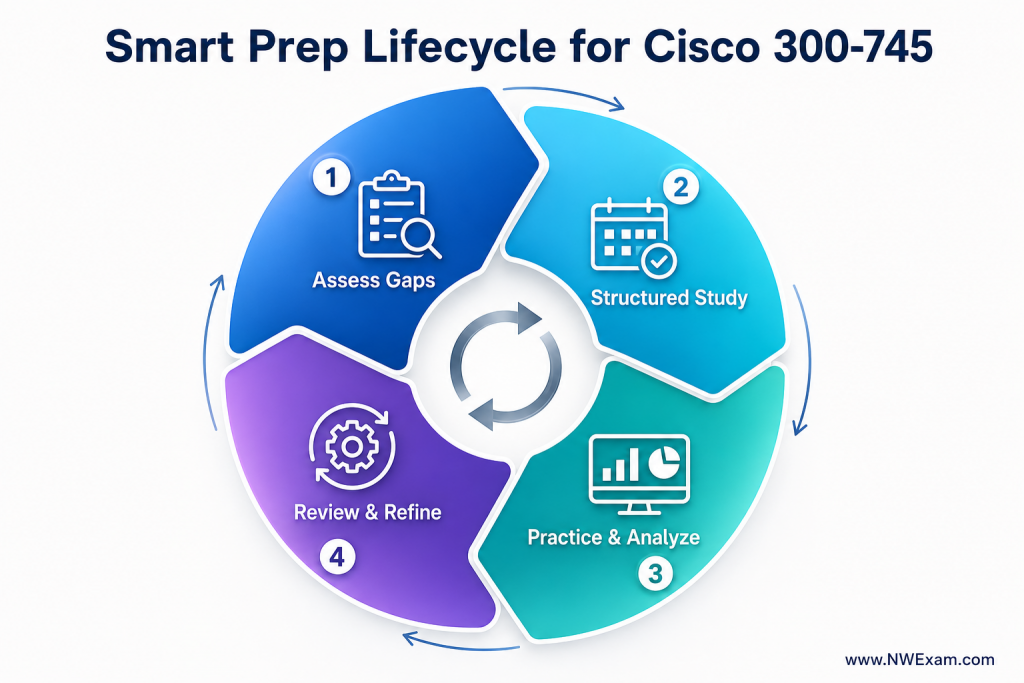
Assessing Your Current Skill Gaps
Before diving into new material, it’s crucial to evaluate your current understanding of Cisco security infrastructure design concepts. Begin by reviewing the official Cisco 300-745 exam blueprint and comparing it against your practical experience and existing certifications. Self-assessment quizzes or initial practice questions can help pinpoint specific areas where your knowledge is strong and, more importantly, where it needs significant improvement. This diagnostic step allows you to prioritize syllabus domains, dedicating more time to areas like Designing Cisco Identity Services Engine deployments if that’s a weaker spot, for instance, rather than revisiting already mastered concepts.
Scheduling Dedicated Study Blocks
Consistency is more impactful than intensity when it comes to long-term learning. Integrate dedicated study blocks into your weekly schedule, treating them with the same importance as work appointments. These blocks should ideally be 1-2 hours long, allowing for focused attention without leading to fatigue. Vary the topics within these blocks to keep your mind engaged and prevent monotony. For instance, one session might focus on Cisco ASA and Firepower design principles, while the next delves into Cloud security design with Cisco products. Ensure these sessions include time for active learning—summarizing concepts, creating diagrams, or explaining topics aloud—to deepen understanding. Regular reviews of previously covered material should also be scheduled to reinforce learning and aid long-term memory. A structured plan helps you track progress and adjust your learning cadence, ensuring you stay on course for your Cisco certification journey.
Mastering Core Security Infrastructure Domains for 300-745
A deep dive into the technical domains of the Cisco 300-745 SDSI exam is where true mastery begins. This section outlines key concepts within each major syllabus area, emphasizing the practical application and design considerations that the exam assesses. Understanding these core principles is vital for developing comprehensive security solutions and is a cornerstone of intelligent preparation.
Designing Secure Network Access Solutions
This domain is fundamental to securing any network. It encompasses the principles and practices for controlling who or what can access your network resources and how securely.
Implementing Remote Access VPNs
Candidates must be proficient in designing secure remote access solutions using technologies like Cisco AnyConnect. This includes understanding clientless and client-based VPNs, split tunneling, full tunneling, authentication methods (AAA integration with RADIUS/TACACS+), authorization policies, and group policies. Design considerations include scalability, high availability, and performance for a large number of remote users.
Architecting Site-to-Site VPNs
The exam expects knowledge of designing secure connectivity between different network sites. This involves understanding IPSec VPN tunnels, GRE over IPSec, DMVPN, and FlexVPN. Key design elements include encryption standards (AES, 3DES), hashing algorithms (SHA), perfect forward secrecy (PFS), and key exchange mechanisms (IKEv1/IKEv2). Considerations for redundancy, traffic segmentation, and routing over VPNs are also crucial.
Network Segmentation Strategies
Designing secure network access also involves segmenting the network to limit the blast radius of a breach. This includes understanding VLANs, VRFs, and micro-segmentation using technologies like Cisco TrustSec (SGTs). The focus is on designing policies that control inter-segment communication and enforce the principle of least privilege.
Designing with Cisco ASA and Firepower Threat Defense
Cisco ASA and Firepower platforms are central to many secure infrastructure designs. The exam assesses a candidate’s ability to integrate these technologies effectively.
Cisco ASA Design Principles
This includes designing high-availability ASA deployments (active/standby, active/active with contexts), multi-context mode for logical segmentation, and integrating ASA with other security services like IPS, AVC, and identity-based policies. Understanding NAT/PAT configurations, access control lists, and routing within ASA are also important.
Firepower Threat Defense (FTD) Integration
Candidates must understand how to design solutions leveraging Cisco Firepower Threat Defense, which combines ASA firewalling with advanced threat capabilities like IPS, AVC, URL filtering, and malware protection. This involves designing deployment models (inline, passive, tap), policy orchestration with Firepower Management Center (FMC), and designing for high performance and redundancy.
Designing Cisco Identity Services Engine (ISE) Deployments
Cisco ISE is a critical component for identity-based access control. Designing its deployment involves understanding complex authentication and authorization flows.
ISE for Secure Network Access
This section focuses on designing ISE deployments for Wired, Wireless, and VPN access using 802.1X, MAB, and Web Authentication. Key design elements include policy sets, authentication/authorization policies, profiling endpoints, posture assessment, and guest access solutions. Understanding how to integrate ISE with Active Directory, LDAP, and other identity sources is also vital.
Advanced ISE Features in Design
Beyond basic access control, the exam covers designing solutions utilizing ISE’s advanced capabilities like TrustSec for SGT enforcement, pxGrid for threat intelligence sharing, and MDM integration for device compliance. Design considerations for scalability, high availability (ISE distributed deployments), and performance are critical.
Advanced Threat Protection and Cloud Security Design
Modern security infrastructure designs must account for advanced persistent threats and the evolving landscape of cloud computing.
Designing Cisco Cloud Security Solutions
This includes integrating Cisco security products with cloud environments (AWS, Azure, GCP). Candidates should understand designing secure connectivity to cloud (VPN, Direct Connect/ExpressRoute), applying security policies in cloud (Cloud-Native firewalling, security groups), and leveraging Cisco Cloudlock or Umbrella for cloud application security and DNS-layer protection. Designing for data loss prevention (DLP) in cloud is also relevant.
Implementing Cisco AMP for Endpoints and Network
Designing solutions that incorporate Advanced Malware Protection (AMP) for both endpoints and the network to detect, analyze, and remediate advanced threats. This involves understanding file reputation, sandboxing, Indicators of Compromise (IoCs), and integration with other security platforms.
Cisco SD-WAN Security Design and VPN Solutions
As networks become more distributed, securing SD-WAN deployments and various VPN solutions is paramount.
Securing Cisco SD-WAN Deployments
This involves designing security within the Cisco SD-WAN architecture. Key topics include understanding control plane and data plane security, VPN orchestration, segmentation within SD-WAN, and integrating security services (e.g., firewall, IPS, URL filtering) at the branch or in the cloud. Designing for secure direct internet access (DIA) and direct cloud access (DCA) is also assessed.
Designing Comprehensive VPN Architectures
Beyond basic remote and site-to-site, this covers designing complex VPN architectures tailored to specific business needs, including multi-cloud VPNs, partner VPNs, and overlay VPNs. It requires evaluating different VPN technologies and choosing the most appropriate solution based on requirements for security, performance, and manageability.
Risk, Event, and Requirements Management
A critical aspect of security design is understanding the lifecycle of risk management and how to translate business needs into technical requirements.
Translating Business Requirements to Security Design
This involves gathering and analyzing business requirements, regulatory compliance needs (e.g., GDPR, HIPAA), and industry best practices. Candidates must be able to translate these into concrete security design objectives and technical controls, ensuring the proposed infrastructure meets both functional and non-functional security requirements.
Designing Security Event Monitoring and Analysis
Designing robust logging, monitoring, and alerting solutions using Cisco security products (e.g., Stealthwatch, Secure Network Analytics, Cisco Secure Event Analytics). This includes understanding SIEM integration, log correlation, anomaly detection, and designing for effective incident detection and response capabilities.
Artificial Intelligence, Automation, and DevSecOps in Security Design
The exam acknowledges the increasing role of emerging technologies in modern security.
Integrating AI and Machine Learning for Security
Understanding how AI and ML are applied in threat detection, anomaly identification, and behavioral analysis across Cisco security platforms. This section focuses on designing solutions that leverage these capabilities to enhance threat intelligence and automate security insights.
Automating Security Operations with Cisco Solutions
Candidates should be familiar with designing automated security workflows and responses using platforms like Cisco SecureX. This involves understanding playbooks, security orchestration, automation, and response (SOAR) principles, and integrating security tools for automated incident handling, vulnerability management, and policy enforcement.
Designing Security in DevSecOps Environments
Integrating security practices throughout the software development lifecycle (SDLC). This includes designing for security at every stage, from code development (static/dynamic analysis) to deployment and operations. Understanding secure coding practices, infrastructure as code (IaC) security, and continuous security validation is crucial.
Leveraging Practice Exams for Exam Insights
Practice exams are not merely assessment tools; they are invaluable learning instruments for the Cisco 300-745 SDSI exam. Used strategically, they provide crucial insights into exam patterns, identify knowledge gaps, and hone time management skills. This disciplined approach to practice tests is a cornerstone of smart preparation, far superior to simply reviewing questions and answers.
Simulating Exam Conditions Effectively
To truly benefit from practice exams, simulate the actual testing environment as closely as possible. Take the quality practice questions under timed conditions, mirroring the 90-minute duration. This helps you build stamina, manage stress, and develop a natural rhythm for answering questions under pressure. Pay attention to how quickly you read and process information, and how efficiently you arrive at answers. Practicing in a quiet, distraction-free environment further enhances the simulation’s authenticity, preparing you mentally and physically for the exam day.
Analyzing Performance Gaps Systematically
The real value of a practice exam lies not in the score, but in the detailed analysis of your performance. After completing each practice test, dedicate significant time to reviewing every question, especially those you answered incorrectly or struggled with. Understand *why* an answer was correct or incorrect. Is there a conceptual misunderstanding? Was it a misinterpretation of the question? Did you overlook a detail? Document your weak areas by topic (e.g., designing secure network access Cisco solutions, Cisco ASA and Firepower design principles) and use this data to refine your study plan. This iterative process of practice, analysis, and targeted study transforms weaknesses into strengths, ensuring comprehensive coverage of the Designing Cisco Security Infrastructure syllabus.
Adopting Ethical Preparation: The NWExam Advantage
Ethical preparation is paramount for long-term career success and genuine skill acquisition. While the temptation to seek out “exam dumps” might arise, relying on such unethical materials can lead to incomplete knowledge, a lack of practical understanding, and potential invalidation of your certification. Instead, focus on legitimate and effective study resources. NWExam.com offers valuable Cisco 300-745 practice exam questions designed to mirror the actual exam format and depth, promoting a deeper understanding of the subject matter. These resources are crafted to help candidates understand the underlying concepts rather than just memorize answers, fostering true competence in designing secure network infrastructures.
Avoiding Common Preparation Pitfalls and Achieving Productivity
Many aspiring candidates inadvertently sabotage their Cisco 300-745 preparation through common pitfalls that hinder productivity and effective learning. Recognizing and actively avoiding these traps is as crucial as implementing smart study techniques. A calm, systematic approach will always yield better results than frantic, disorganized efforts.
Over-reliance on Rote Memorization
The Cisco 300-745 SDSI exam focuses heavily on design concepts, problem-solving, and applying principles rather than simple recall. Merely memorizing facts, configurations, or practice question answers will not suffice. The exam questions often present scenarios requiring critical thinking and an understanding of *why* certain design choices are made. Instead, strive for conceptual mastery. Understand the rationale behind Cisco security infrastructure best practices, the trade-offs in designing VPN solutions Cisco 300-745, and the implications of different identity services engine deployments. This deeper understanding will allow you to adapt to varied question formats and complex scenarios.
Neglecting Weaker Syllabus Areas
It’s natural to gravitate towards topics you find easier or more interesting. However, consistently avoiding challenging sections creates critical knowledge gaps that the exam will inevitably expose. Your study blueprint should explicitly allocate more time to weaker areas identified through self-assessment and practice exams. If cloud security design with Cisco products is a challenge, dedicate extra sessions to it. Similarly, if Artificial Intelligence, Automation, and DevSecOps concepts feel unfamiliar, prioritize them. A balanced and comprehensive study ensures no critical domain is left unaddressed.
Ignoring Physical and Mental Well-being
Sustained productivity for a demanding exam like Cisco 300-745 depends significantly on your physical and mental health. Neglecting sleep, proper nutrition, and regular breaks leads to diminished cognitive function, reduced retention, and increased stress. Integrate short, regular breaks into your study sessions, ensure you’re getting adequate rest, and incorporate physical activity. Approaching the exam feeling refreshed and mentally sharp will significantly impact your ability to focus, recall information, and think critically under pressure. This holistic approach is key to maintaining a calm, productivity-focused study regimen.
Beyond Certification: Real-World Application and Career Trajectory
Achieving the Cisco 300-745 SDSI certification is more than just passing an exam; it’s about validating a skillset that translates directly into high-impact roles in cybersecurity. The knowledge gained in designing Cisco security infrastructure solutions prepares professionals to tackle complex, real-world challenges, solidifying their position as valuable assets.
Translating Design Knowledge to Practical Implementation
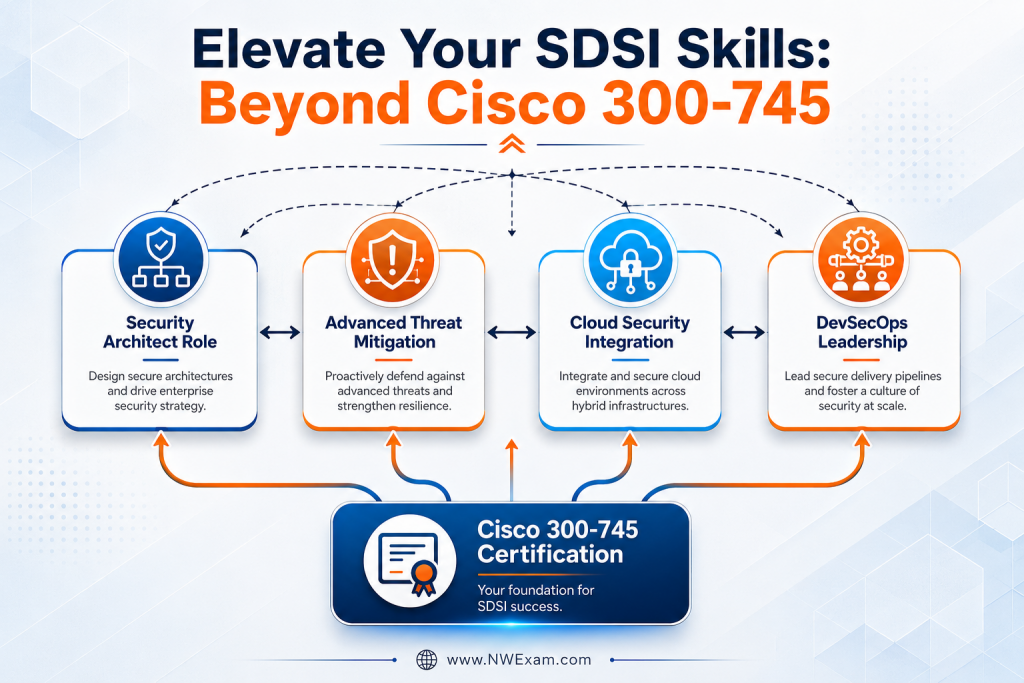
The Designing Cisco Security Infrastructure exam rigorously tests a candidate’s ability to conceptualize and architect secure networks. This means moving beyond theoretical understanding to practical application. Professionals certified in Cisco 300-745 are equipped to translate business security requirements into concrete technical designs, whether it involves securing network access, deploying advanced threat protection, or integrating cloud security components. This capability is highly sought after by organizations looking to build resilient and future-proof security postures. The certification validates an ability to design secure environments with solutions such as Cisco ASA and Firepower, manage identity with ISE, and incorporate modern concepts like SD-WAN security and DevSecOps.
Navigating Your Cisco Security Certification Pathway
The Cisco 300-745 SDSI certification is often a key milestone in a broader professional development journey within Cisco’s security track. It contributes to various Cisco professional-level certifications, demonstrating a specialized focus on security design. Professionals can leverage this credential to pursue roles such as Security Architect, Senior Security Engineer, or Network Security Designer. The detailed knowledge acquired about Cisco security infrastructure design concepts and best practices serves as a robust foundation for further specialization or advanced certifications, opening doors to more challenging and rewarding career opportunities within the dynamic field of cybersecurity. This exam pathway signifies not just a single achievement, but a continuous commitment to excellence and growth in a critical domain.
Conclusion: Empower Your Cisco 300-745 Journey with Smart Preparation
Conquering the Cisco 300-745 SDSI exam, Designing Cisco Security Infrastructure, demands a deliberate shift from last-minute cramming to a systematic, productivity-focused preparation strategy. By embracing smart prep, you not only improve your chances of success but also cultivate a deeper, more enduring understanding of critical security infrastructure design principles. This calm and actionable approach empowers you to confidently navigate the complex syllabus, master core technical domains, and strategically leverage practice resources.
Invest in your success by building a robust study blueprint, meticulously analyzing your progress, and prioritizing comprehensive understanding over superficial memorization. Your journey to Cisco 300-745 certification is an opportunity to solidify your expertise and position yourself as a leader in designing the secure networks of tomorrow.
Ready to embark on your focused preparation? Start building your personalized study plan today, prioritize understanding over rote learning, and leverage high-quality resources to guide your Cisco 300-745 journey. For more insights and to support your preparation, explore comprehensive resources and tools designed to enhance your understanding of Cisco security infrastructure solutions and bolster your confidence.
Frequently Asked Questions
1. What is the Cisco 300-745 SDSI exam primarily focused on?
The Cisco 300-745 SDSI exam, Designing Cisco Security Infrastructure, focuses on a candidate’s ability to design, implement, and manage secure network infrastructures using various Cisco technologies. It covers secure network access, threat defense, identity management, and advanced security design principles.
2. How long is the Cisco 300-745 exam, and how many questions are there?
The Cisco 300-745 exam has a duration of 90 minutes and typically includes 55-65 questions. The number of questions can vary slightly, so candidates should manage their time efficiently per question.
3. What are the key syllabus domains for the Cisco 300-745 SDSI exam?
The primary syllabus domains are Secure Infrastructure (30%), Applications (25%), Risk, Events, and Requirements (30%), and Artificial Intelligence, Automation, and DevSecOps (15%). These domains cover a comprehensive range of security design topics.
4. How can I effectively prepare for the Cisco 300-745 exam without cramming?
Effective preparation involves creating a personalized study blueprint, consistently scheduling dedicated study blocks, assessing skill gaps, and leveraging practice exams for analytical insights. Focusing on conceptual understanding, rather than memorization, is key.
5. What kind of career opportunities can the Cisco 300-745 SDSI certification open?
This certification is valuable for roles such as Security Architect, Senior Security Engineer, Network Security Designer, or any professional responsible for architecting secure network environments. It validates specialized skills in designing robust Cisco security solutions.


