Perimeter defenses stop the noisy attacks, but the skilled adversary already inside your network stays quiet, and that is exactly the gap the Cisco threat hunting exam trains you to close. The 300-220 CBRTHD exam, formally titled Conducting Threat Hunting and Defending using Cisco Technologies for Cybersecurity, sits inside the Cisco CyberOps Professional certification and validates that you can hunt for hidden threats instead of waiting for an alert. This guide breaks down what the 300-220 tests, how its six domains are weighted, and how to prepare so you walk into the exam ready to hunt.
Table of Contents
- What Does the Cisco 300-220 CBRTHD Exam Actually Cover?
- How Are the Six 300-220 Threat Hunting Domains Weighted?
- What Threat Hunting Fundamentals Does CBRTHD Test?
- How Does the 300-220 Exam Approach Threat Modeling and Attribution?
- Which Hands-On Threat Hunting Techniques Appear on the CBRTHD Exam?
- How Do You Defend and Report After a Hunt?
- Who Should Take the Cisco 300-220 CBRTHD Exam?
- How Should You Prepare for the Cisco Threat Hunting Exam?
- What Career Paths Open After Passing 300-220?
- Frequently Asked Questions About the 300-220 Exam
- Conclusion
What Does the Cisco 300-220 CBRTHD Exam Actually Cover?
The Cisco 300-220 CBRTHD exam measures your ability to conduct proactive threat hunting and defend enterprise environments using Cisco security technologies. It is a 90-minute concentration exam within the CyberOps Professional track, covering threat hunting fundamentals, threat modeling, actor attribution, hunting techniques, hunting processes, and hunting outcomes. Passing 300-220 proves you can find adversaries that automated tools miss.
Because it is a professional-level concentration exam, the CBRTHD assumes you already understand security monitoring basics and can read logs, telemetry, and packet data fluently. The questions favor applied judgment over memorization, asking you to interpret evidence and choose the right next hunting action. Here are the core exam specifications confirmed for the 300-220 CBRTHD.
| Exam Attribute | Detail |
|---|---|
| Exam Code | 300-220 CBRTHD |
| Exam Name | Conducting Threat Hunting and Defending using Cisco Technologies for Cybersecurity |
| Number of Questions | 55-65 |
| Duration | 90 minutes |
| Passing Score | Variable (750-850 / 1000 approx.) |
| Cost | $300 USD |
| Registration Provider | Pearson VUE |
You schedule the exam through Pearson VUE registration, either at a test center or as an online-proctored session. The variable passing score reflects Cisco scaled scoring, so treat the 750-850 range as a target rather than a fixed line.
How Are the Six 300-220 Threat Hunting Domains Weighted?
The 300-220 CBRTHD blueprint splits into six weighted domains that move from theory to hands-on execution. Four domains carry 20% each, and two carry 10% each, so no single area dominates. Understanding these weightings tells you exactly where to concentrate study time, because the fundamentals, attribution, techniques, and processes domains together make up 80% of your score.
| Domain | Weight |
|---|---|
| Threat Hunting Fundamentals | 20% |
| Threat Modeling Techniques | 10% |
| Threat Actor Attribution Techniques | 20% |
| Threat Hunting Techniques | 20% |
| Threat Hunting Processes | 20% |
| Threat Hunting Outcomes | 10% |
The balance is deliberate. The two 20% technique-and-process domains reward candidates who have actually run hunts, while the two 20% fundamentals-and-attribution domains reward those who understand the theory behind adversary behavior. If you can work through a full set of 300-220 practice questions and explain why each answer is correct, you are hitting the balance the blueprint expects.
What Threat Hunting Fundamentals Does CBRTHD Test?
The Threat Hunting Fundamentals domain is worth 20% of the 300-220 CBRTHD exam and grounds every other topic. It expects you to apply the Threat Hunting Maturity Model, reason about the Pyramid of Pain, interpret threat intelligence reports, and judge where automation helps or hurts a security operations center. These fundamentals decide whether your hunts are structured or guesswork.
The Maturity Model and Pyramid of Pain
Cisco expects you to map an organization to the Threat Hunting Maturity Model and connect that placement to the Pyramid of Pain. The pyramid ranks indicators by how much disruption denying them causes an attacker, from trivial hash values at the bottom to tactics, techniques, and procedures at the top. Hunting higher on the pyramid inflicts more pain and forces adversaries to rebuild their playbooks.
Reading Intelligence and Judging Automation
You also need to interpret a threat intelligence report and draw conclusions about whether you face a known advanced persistent threat, a commodity human-driven actor, or a commodity machine-driven campaign. The domain further asks you to weigh the advantages and disadvantages of automation, including artificial intelligence and machine learning, in SOC operation, and to recognize the limiting factors of detection tools for malware behavior and propagation.
“Threat hunting is a focused and iterative approach to searching out, identifying, and understanding adversaries internal to the defender’s networks.”
How Does the 300-220 Exam Approach Threat Modeling and Attribution?
Threat Modeling Techniques carries 10% of the 300-220 exam and Threat Actor Attribution Techniques carries 20%, and together they teach you to predict and identify adversary behavior. The CBRTHD exam wants you to select a modeling approach for a scenario, prioritize attacks, and pin observed activity to a specific actor using logs and artifacts. Frameworks do the heavy lifting here.
Modeling Threats With Established Frameworks
The exam names specific standards you must know: the MITRE ATT&CK framework for mapping tactics and techniques, the MITRE CAPEC catalog for attack pattern prioritization, plus TaHiTI and PASTA methodologies. You use ATT&CK to model tactics, techniques, and procedures or detect changes in them, and you use the Cyber Kill Chain and CAPEC model to rank the priority level of attacks.
Attributing Activity to a Threat Actor
Attribution asks you to determine attack tactics, techniques, and procedures from logs and interpret the behavior of a given threat actor. A recurring exam skill is distinguishing an authorized penetration test from a genuine attack based on delivery method, payload, tactic, or timeline. You also identify usable artifacts for detecting advanced persistent threat actors across every level of the Pyramid of Pain.
- Structured versus unstructured hunting and when each fits
- Threat intelligence handling: gathering, cataloging, utilizing, and removing
- Priority scoring with the Cyber Kill Chain and MITRE ATT&CK
Which Hands-On Threat Hunting Techniques Appear on the CBRTHD Exam?
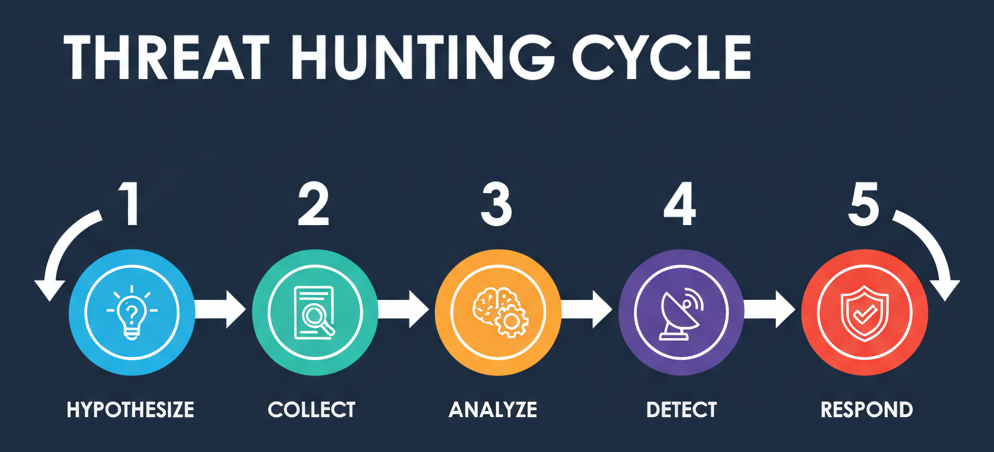
Threat Hunting Techniques is a 20% domain and the most hands-on part of the 300-220 CBRTHD exam. It spans scripting, endpoint and network analysis, cloud-native hunting, and memory forensics. This is where the exam confirms you can move beyond dashboards and actually pull threats out of raw telemetry, code, and system memory using the right tool for each artifact.
Scripting, Endpoint, and Network Hunting
You are expected to use scripting languages such as Python and PowerShell to augment detection and analytics. The domain covers finding undetected threats in endpoint artifacts, tracing command-and-control communications to and from infected hosts, and selecting suspicious activity from session and protocol data. You also determine the stage of infection within C2 communications by reading traffic data.
Memory-Resident Attacks and Code Analysis
Memory-resident attacks get direct attention. The exam references analysis with memory-specific tools such as Volatility memory forensics, and it asks you to select weaknesses in code using tools like PE Checker, Burp Suite, and Semgrep. Additional skills include performing a cloud-native threat hunt, constructing a detection signature, and describing analysis for the applications and operating systems used by IoT devices.
- Augment analytics with Python and PowerShell scripting
- Perform cloud-native and endpoint-based hunts
- Analyze memory-resident attacks with Volatility
- Build detection signatures from observed behavior
How Do You Defend and Report After a Hunt?
The Threat Hunting Processes domain (20%) and the Threat Hunting Outcomes domain (10%) close the loop on the 300-220 CBRTHD exam by turning findings into defense. Once you locate a threat, the exam expects you to reverse engineer it, recommend remediation, and communicate results that drive real change. Hunting has no value if the outcome does not harden the environment.
Building Defensive Processes
The processes domain covers identifying memory-resident attacks, determining compromises through reverse engineering, and finding known and unknown gaps in detection such as vulnerabilities and configuration errors. You construct a runbook or playbook for a detectable scenario, recommend tools, detection, and deception techniques, and propose remediation strategies and security countermeasures based on the results of a threat assessment.
Communicating Hunt Outcomes
The outcomes domain focuses on impact. You describe how multiproduct integration improves data visibility and speeds analysis, diagnose analytical gaps using hunting methodologies, and recommend a mitigation strategy to block C2 traffic. Critically, you use presentation resources to convey findings and direct environmental change, and you recommend how a hunt team advances to the next Threat Hunting Maturity Model phase.
Who Should Take the Cisco 300-220 CBRTHD Exam?
The Cisco 300-220 CBRTHD exam suits security professionals who already work in detection and response and want to specialize in proactive hunting. It fits SOC analysts, incident responders, threat intelligence analysts, and security engineers ready to move from reactive alerting to hypothesis-driven investigation. The exam rewards practical experience over classroom theory, so hands-on time matters most.
Candidates typically hold associate-level knowledge before attempting the concentration. If you have not yet built that base, the CyberOps Associate foundation covers the security monitoring, host-based analysis, and network intrusion concepts that CBRTHD assumes you already understand. Strong scripting ability and comfort with log analysis platforms are practical prerequisites the blueprint expects.
How Should You Prepare for the Cisco Threat Hunting Exam?
Preparing for the Cisco threat hunting exam works best when you pair blueprint study with real hunting practice. Because the 300-220 CBRTHD rewards applied judgment, passive reading is not enough. Build a plan that mirrors the six domains, spend the most time on the four 20% areas, and rehearse with realistic scenarios until interpreting evidence becomes second nature.
A Domain-Driven Study Plan
- Map every objective in the official blueprint to a study resource so you never study blind.
- Set up a lab where you can run Python and PowerShell hunts against sample telemetry.
- Practice memory analysis with Volatility and pattern mapping with the ATT&CK matrix.
- Write a sample runbook and a findings report to rehearse the outcomes domain.
- Take timed practice tests and review every wrong answer until you understand the reasoning.
Practice the Way You Will Be Tested
The CBRTHD exam presents scenario questions, so rehearse decision-making rather than recall. Work through hunting scenarios that force you to choose a modeling approach, prioritize an attack, or pick the correct memory tool. Track your accuracy by domain, then loop back to weak areas. Consistent scenario practice is the single strongest predictor of a first-attempt pass.
What Career Paths Open After Passing 300-220?
Passing the 300-220 CBRTHD exam and earning the CyberOps Professional certification signals that you can hunt, defend, and report at a senior level. Threat hunting is one of the most in-demand security specialties, and employers pay a premium for analysts who reduce dwell time by finding adversaries early. The credential strengthens roles across the modern security operations center.
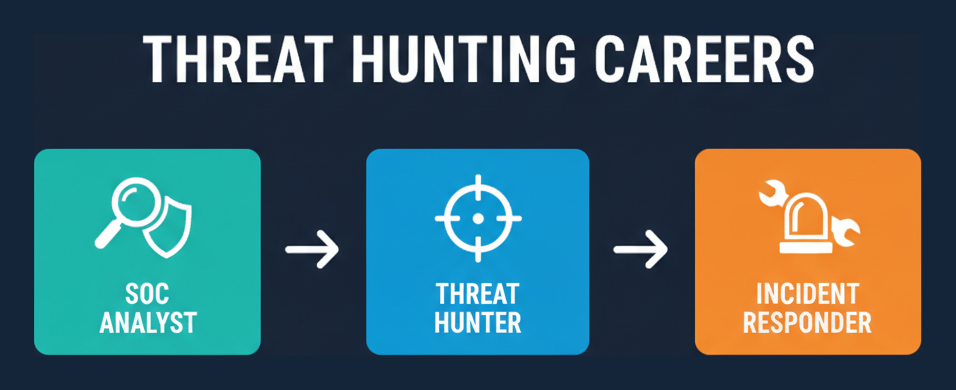
Typical destinations include threat hunter, senior SOC analyst, incident response lead, threat intelligence analyst, and detection engineer. Many professionals pair hunting skills with broader defensive design by studying the Cisco security core concepts, which complement hunting with network security architecture and enforcement. Together, these skills position you for security architect and team-lead tracks.
Frequently Asked Questions About the 300-220 Exam
Is the 300-220 CBRTHD an associate or professional exam?
The 300-220 CBRTHD is a professional-level concentration exam within the Cisco CyberOps Professional certification. It assumes you already hold associate-level security monitoring knowledge and can analyze logs, telemetry, and network traffic without guidance.
How many questions are on the Cisco 300-220 exam?
The exam contains 55 to 65 questions delivered over 90 minutes. The questions emphasize applied scenarios, so managing your time and reading evidence carefully matters as much as knowing the theory.
What is the passing score for the CBRTHD exam?
Cisco uses a variable scaled score, typically in the 750-850 out of 1000 range. Because scoring is scaled per exam form, aim to master every domain rather than target a single fixed number.
How much does the 300-220 exam cost?
The 300-220 CBRTHD exam costs $300 USD, excluding local taxes. You register and schedule it through Pearson VUE, either at an authorized test center or as an online-proctored session.
Which frameworks does the 300-220 exam test?
The blueprint explicitly references MITRE ATT&CK, MITRE CAPEC, TaHiTI, PASTA, and the Cyber Kill Chain. You use these frameworks to model threats, prioritize attacks, and structure your hunting hypotheses.
Do I need programming skills for the CBRTHD exam?
Yes, scripting is a tested skill. The Threat Hunting Techniques domain expects you to use Python and PowerShell to augment detection and analytics, so hands-on scripting practice is strongly recommended.
How long should I study for the 300-220 exam?
Most candidates with detection and response experience prepare for two to three months. Time varies with your scripting fluency, familiarity with ATT&CK, and access to a lab for practicing memory and endpoint hunts.
Does the 300-220 exam cover cloud threat hunting?
Yes. The Threat Hunting Techniques domain requires you to perform a cloud-native threat hunt, alongside endpoint artifact analysis, C2 communication tracing, and memory-resident attack investigation.
What tools appear on the CBRTHD exam?
The blueprint names Volatility for memory analysis and PE Checker, Burp Suite, and Semgrep for code-level weakness analysis. You should understand what each tool inspects and when to reach for it during a hunt.
Conclusion
The Cisco 300-220 CBRTHD exam is a proving ground for security professionals who want to hunt threats instead of waiting for them. Across its six domains, the exam validates that you can model adversaries, attribute their activity, run technical hunts through memory and telemetry, and turn every finding into a stronger defense. Focus your study on the four 20% domains, practice with realistic scenarios, and rehearse both the hunting and the reporting side of the job. If you are ready to specialize in one of cybersecurity’s most valued skills, map the blueprint, build a lab, and start hunting today. Your first-attempt pass starts with disciplined, scenario-driven practice.


